
Affair Fog Part Three: I Cheated - Why Did It Happen and What Do I Do Now?
By Jordan Kurtz, MA, LPC, Denver Trauma Therapist

If you’ve found yourself asking “Why did I do this?” after stepping outside your relationship, you’re not alone, and you’re likely holding more confusion, guilt, or self-doubt than answers.
Welcome to the final part of our Affair Fog series. In part two, we explored the impact of infidelity, what affair fog is, and how healing can begin for the partner who was betrayed. In this post, we turn toward the other impacted partner—the individual who has stepped outside of the relationship.
We’ll revisit affair fog and how it can create conditions that sustain infidelity, while also beginning to explore the underlying “why” beneath the behavior, so you can start to make sense of what happened without collapsing into shame.
Why Did I Cheat? Understanding Affair Fog
Affair fog describes the state of mind someone can become immersed in during an affair. The outside relationship promotes and sustains emotional, mental, and physical changes that reinforce a continued pull toward it—often even in the presence of guilt, anxiety, or other internal conflict.
Being in an affair is often compared to a state of intoxication: it can feel good, hard to stop, and at times like an “out of body” experience. When we are with the outside partner (or even thinking about them), our minds and bodies can enter a state of craving that alters our ability to be present and function as we typically do in our roles at work, as a friend, and as a partner. As a result, we may begin to feel unrecognizable or different, - not only to other, but to ourselves.
While affair fog is a psychological phenomenon, it also has physiological underpinnings. Emotional states such as arousal, novelty, and excitement are associated with increases in neurotransmitters like dopamine and norepinephrine. At high levels, these can create a powerful sense of reward - similar to the reinforcement cycles seen in addiction - making it difficult to step away.
There can also be powerful psychological reinforcement. The outside partner may meet needs or desires that feel absent in the primary relationship. When attachment needs are activated or met, we often experience increased feelings of well-being and, at times, an enhanced sense of self.
Common Reasons for Affairs
The reasons we pursue the relationships we do are inherently complex and vary from person to person. Similarly, understanding why betrayal occurs is rarely straightforward and often depends on the unique dynamics within each relationship.
That said, there are several recurring patterns our Denver trauma therapists and attachment specialists notice when working with individuals seeking support after infidelity. We outline some of those themes below.
These reasons don’t apply to everyone, but they can offer a starting point for understanding what may have contributed to the behavior.
Emotional Needs and Unmet Connection
All humans need safety, acceptance, love, and a sense of belonging to thrive. As young ones we depend upon our caretakers to provide these emotional nutrients, and as we age, we tend to rely upon friends and intimate partners to offer us these needs in more central ways.
When these needs go unmet, it can can create a sense of emotional isolation and hunger often accompanied with anxiety, depression, and illness. If these patterns persist and change feels out of reach within the relationship, some individuals may begin to seek connection outside of it in an attempt to fill those gaps.
Physical Intimacy and Unmet Desire
The significance of physical intimacy - and how each person experiences desire - varies from person to person. While sexual needs and preferences differ, physical connection often plays an important role in both emotional closeness and overall well-being.
Physical intimacy is not only associated with bodily pleasure, but also with emotional and mental benefits such as stress reduction and a greater sense of connection with a partner. When this aspect of the relationship feels strained, inconsistent, or absent, it can contribute to tension, irritability, and emotional distance over time.
In some cases, an outside relationship may temporarily meet these unmet physical needs, reducing that sense of tension while also reinforcing feelings of desirability or validation.
Escaping Stress and the Need for Relief
Chronic stress can keep our nervous system in a near-constant state of activation, making it difficult to truly rest or “wind down.” Whether that stress stems from ongoing conflict in the relationship or from the cumulative demands of daily life, it can begin to feel like there’s no space to breathe.
In this state, an affair can begin to function as a form of escape. A place that feels separate from pressure, responsibility, or expectation. It may be one of the only spaces where someone feels able to relax, feel desired, or experience a sense of freedom and curiosity.
Again, this doesn’t justify the behavior, but it can help explain why the pull toward that relief can feel so strong.
Learned Patterns and Relationship Modeling
Many people grow up in environments, within their family and broader social culture, where infidelity is normalized, minimized, or left unaddressed. When it does occur, it may be avoided, justified, or quietly swept under the rug.
Internalizing these patterns during formative years can shape how we understand relationships, trust, and boundaries. Over time, these early experiences may influence behavior in adult relationships, even when someone consciously values commitment or monogamy.
Shared Values and Compatibility
We are often drawn to people who feel familiar or aligned with us, whether through shared values, interests, or ways of seeing the world. Feeling understood, seen, and connected to someone can create a strong sense of ease and belonging.
When there is a perceived lack of alignment or connection in a primary relationship, this sense of difference can grow over time. In some cases, an outside relationship may feel more attuned or compatible, which can make the connection feel especially compelling.
Cheating As a Response To Your Own Trauma
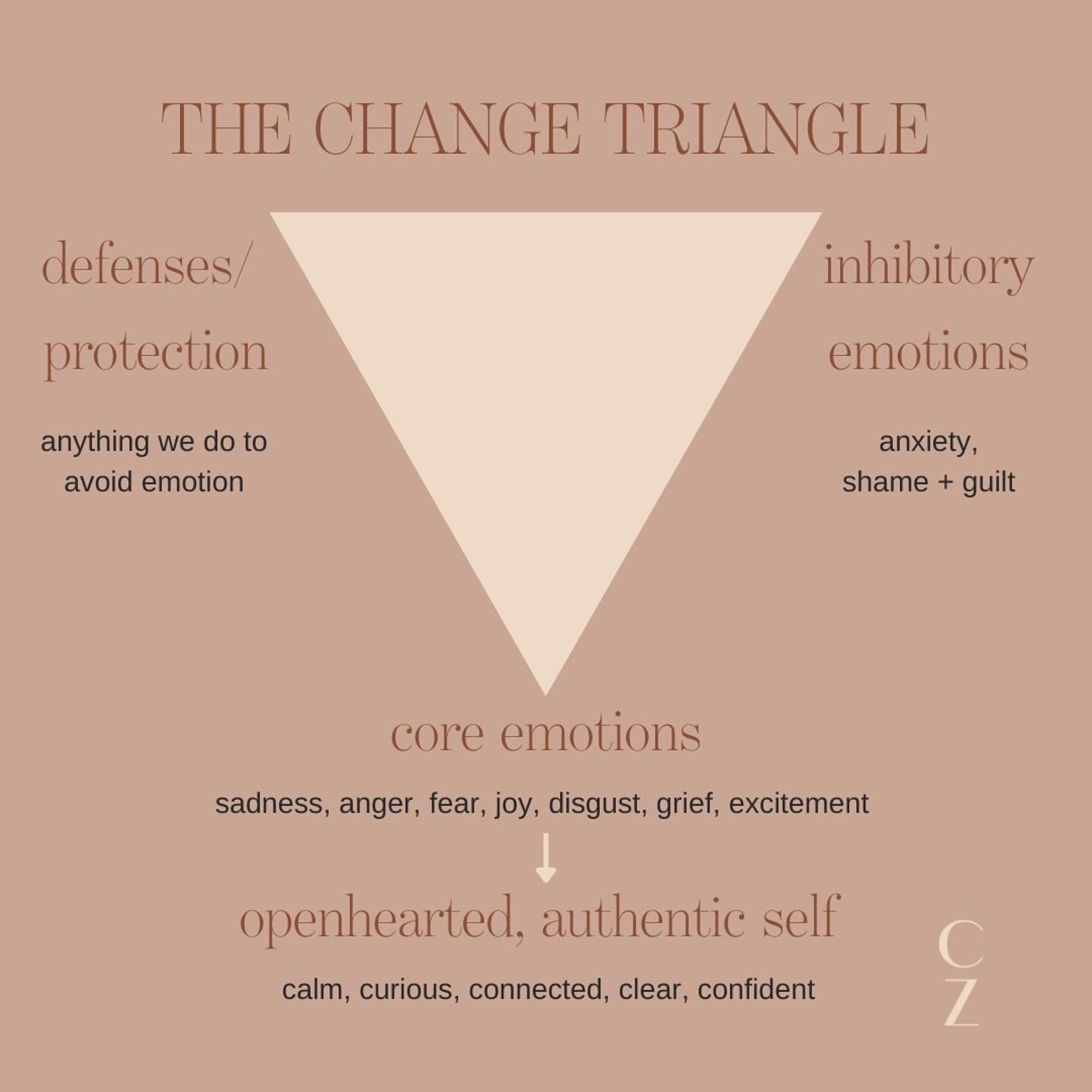
Our early emotional experiences, along with the challenges we face over time, can shape how we relate to and manage difficult emotions. In approaches like Accelerated Experiential Dynamic Psychotherapy (AEDP), these patterns are understood as ways we’ve learned to protect ourselves from emotions that feel overwhelming or threatening (see the top left corner of The Change Triangle diagram.)
These “protections” can show up as behaviors or internal processes that help us avoid deeper emotional experiences. While they may provide short-term relief, they can also prevent underlying needs from being fully recognized or met. Over time, this can contribute to feelings like guilt, anxiety, or shame.
From this lens, an affair can sometimes function as a form of emotional avoidance or protection - offering temporary relief from difficult internal experiences while ultimately reinforcing disconnection from oneself and one’s needs.
If the ‘Change Triangle’ model resonates with you, be sure to explore our previous blog: Facilitating Trauma Healing Through AEDP Therapy and The Change Triangle.
What To Do After You Cheated on Your Partner
Take responsibility for your actions without collapsing into shame
Acknowledge the impact of what happened while staying connected to your capacity to understand and change it.
Allow yourself to feel the discomfort rather than avoiding it
Guilt, sadness, and anxiety can be part of the process. Avoiding these emotions often keeps the cycle in place.
Begin to identify the patterns that contributed to the behavior
Notice how emotional avoidance, unmet needs, or disconnection may have played a role.
Get curious about the “why” beneath your actions
This includes exploring underlying needs for connection, validation, relief, or escape that may not have been fully recognized.
Practice communicating your needs more directly
Learning to express needs and emotions within your relationship can reduce the likelihood of acting outside of it.
Work toward rebuilding integrity in how you show up
This involves aligning your actions with your values over time, not just in moments of clarity.
Seek support if you find yourself feeling stuck or overwhelmed
Having a space to explore this without shame—while still holding accountability—can support more sustainable change.
Healing After Cheating: The Role of Trauma Therapy
An AEDP trauma therapist’s goal is to safely guide a client into experiences of core emotions such as sadness, disgust, anger, and joy that have previously been denied by others, ourselves, or our cultures.
When we can learn to tolerate and non-reactively experience these core emotions, we have access to our open-hearted authentic self: aka, a self-compassionate, regulated being capable of seeing themselves, the world, and others with equanimity, acceptance, and control.
The reasons why we seek affairs that we mentioned above may or may not be overtly known to us. Regardless of our level of insight, trauma therapy gives us a non-shaming exploratory space to identify the ways we avoid emotional discomfort through affairs, and the underlying deeper emotions and needs that drive our exit from our relationship.
For more immediate support on this topic, be sure to explore the rest of our affair fog series:
Trauma Therapy in Denver, CO.
If you’re finding yourself wanting support as you make sense of what happened, therapy can offer a space to explore this without shame—while beginning to understand the patterns, needs, and emotions underneath the behavior.
If it feels like the right next step, you can begin here:
Reach out to schedule a free 20-minute consult call.
Connect with a Denver trauma therapist.
Begin your path towards healing and growth.